Weaving Your Garden, Part 2 – More Textural Treats

The difference between a well textured garden and one that is not, is much like the difference I see when I view my garden with my glasses on… and with them off.

Contrary to my optometrist’s recommendation, I don’t usually wear glasses during my day-to-day activities – except for television viewing and driving. So it is that every time I climb aboard my little red wagon (station wagon that is), the first thing I do is don my specs, and immediately I notice my garden leap out at me.

When I observe my garden without my glasses, I see colour, I see form, I even see contrasting fine and coarse textures – but there is very little depth or detail. However, when bespectacled, I see the finer details; layers of shadow and light, rough texture, smooth texture, shiny surfaces, matte surfaces, ruffles and ridges, creases and edges – a well textured garden. A sensuous garden even.

To achieve this end one must learn to see and appreciate the assorted textural treats that each plant brings to the garden party. As we view the various parts of a plant (leaves, flowers, bark etc.), we subconsciously imagine how they might be experienced by our other senses; how they might feel to the touch – soft, smooth, buttery, waxy, fuzzy; how they might smell, or even taste, and in so doing our visual experience is enhanced.
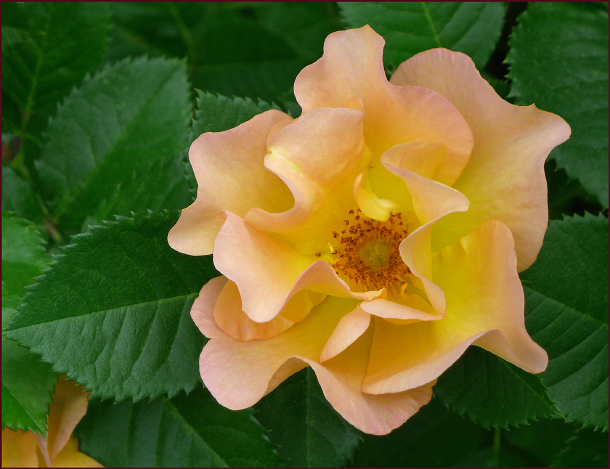
Rosa 'Morden Sunrise'. Petals of finest silk against leaves of rich embossed leather – oh so touchable. Photo: Sue Gaviller

Rosa ‘Morden Sunrise’. Petals of finest silk against leaves of rich embossed leather – oh so touchable.
Photo: Sue Gaviller
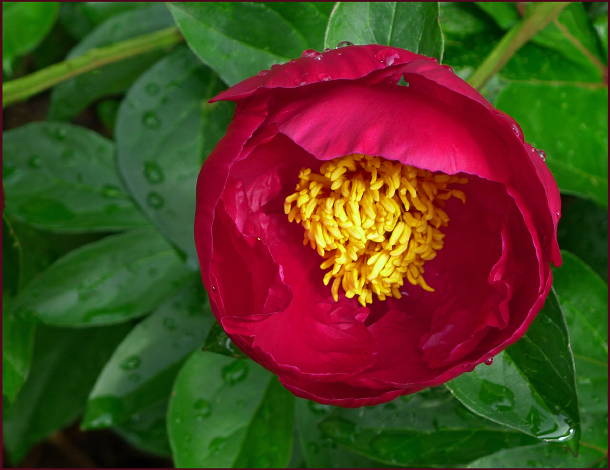
Glossy dark green foliage sets the stage for this single red peony – petals like layers of mouth-watering buttercream icing and stamens of mac n' cheese look good enough to eat. Photo: Sue Gaviller

Glossy dark green foliage sets the stage for this single red peony – petals like layers of mouth-watering buttercream icing and stamens of mac n’ cheese look good enough to eat. Photo: Sue Gaviller

All plants, and all of their constituent parts, have texture – some of course more interesting than others. For many plants it is the foliage that has the most notable texture, others it is their bark, or their seedheads, their flowers, or even specific parts of their flowers that provide the textural appeal.
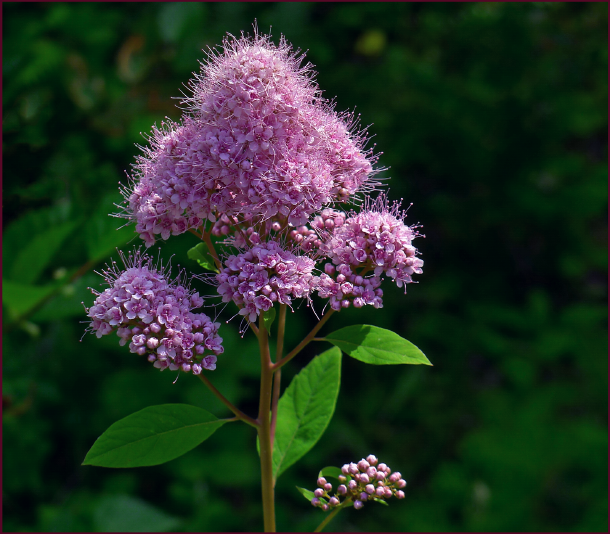
The inflorescence of Spiraea douglasii appears fuzzy, but closer inspection reveals that it is many tiny protruding stamens creating the fuzzy-looking texture. Photo: Pat Gaviller

The inflorescence of Spiraea douglasii appears fuzzy, but closer inspection reveals that it is many tiny protruding stamens creating the fuzzy-looking texture. Photo: Pat Gaviller

Plant textures play off each other and their surroundings, offering layers of subtle beauty and visual depth.

Birch Bark

The richly textured bark of this stunning multistem paper birch contrasts and compliments the surrounding textures – the brick chimney, the siding on the house, and the underplanting of yellow daylilies.
Photo: Sue Gaviller

In my last post I discussed the importance of using fine texture to build volume, and coarse texture for contrast and emphasis. In this post I’ll look more closely at the visual and tactile characteristics of plant surfaces.

Rough or Smooth?

Plant surfaces can be either rough or smooth. In attempting to provide basic definitions for rough texture and smooth texture, I’ve found myself stalled – every time I start to formulate a definition I realize it isn’t as simple as the designer-speak I spout off to my students in design class. The simple definition for rough plant texture is anything with an irregular surface – this means the presence of fine hairs, scales, thorns, lumps or any other protuberance. Smooth texture is of course just the opposite – a regular surface with no protrusions.

However let’s look at a Hosta leaf – a classic example of smooth texture. But many Hosta leaves have very conspicuous veining, producing a somewhat puckered appearance. The leaf surface is still considered smooth – there are no actual protuberances, but perceptually the surface could be described as irregular.

Photo: Pat Gaviller

Huge conspicuously veined Hosta leaves have a puckered appearance. Photo: Pat Gaviller
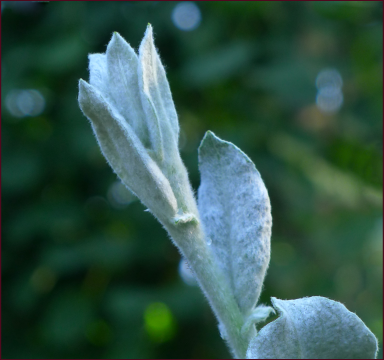
Photo: Sue Gaviller

Soft furry Salix salicola. Photo: Sue Gaviller

The foliage of the polar bear willow (Salix salicola) on the other hand, is covered with many tiny hairs, resulting in a uniformly fuzzy surface – indeed it begs to be caressed.

Some would argue that the words “rough texture” couldn’t possibly describe these leaves that look and feel so soft and downy.

So you see my conundrum here?

Well it doesn’t really matter. The important thing is that you recognize the basic textural differences between rough and smooth, and understand how the eye experiences them – light is refracted and reflected, or in laymen’s terms, bent and bounced off, surfaces that are irregular, differently than smooth surfaces. This creates changes in perceived colour as well as subtle areas of light and dark.

Shiny vs. Matte

Smooth texture is further categorized as either shiny or matte. Shiny surfaces reflect light, thus attract more attention – just ask a child. Conversely, matte surfaces absorb light and tend to blend more into their background.
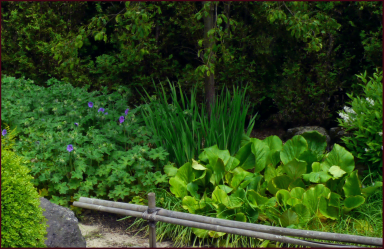
Photo: Pat Gaviller

Bergenia cordifolia, with its coarse texture and glossy leaf surface, makes a great feature plant. Photo: Pat Gaviller

We can keep this in mind when fashioning areas of emphasis or dominance in a garden composition; for example, foliage features – while coarse texture will be the initial determinant of a plant’s dominance, a plant with leaves that are both large and shiny will be a real standout.

Russian olive and Amur cherry

Rough vs. Smooth – Left: Elaeagnus angustifolia – deep vertical fissures in the bark create unique striated texture. Right: Prunus mackii – the bark surface is shiny and the leaf surface is matte . Photos: Pat Gaviller

Bear in mind that too many plants with shiny leaf surfaces, can be both distracting and disunifying – particularly if the leaves are large. In my last post I mentioned that planting Heuchera in my garden had provided some visual relief from the excess of fine texture. What I didn’t mention was that after deciding the big glossy Heuchera leaves were indeed a welcome addition, I made the typical “the-only-thing-better-than-a-good-thing-is-more-of-a-good-thing” mistake, and added a whole bunch more plants with big shiny leaves – eventually creating a bed that consisted almost entirely of coarse, shiny texture. During the course of my design study, as I began to understand the role of texture in my own garden, I surmised that “too much coarse texture” had now supplanted the “too much fine texture” scenario, but it was a while later before I figured out that all those shiny surfaces had amplified the problem.
P1040259

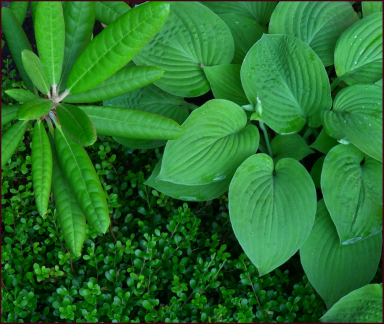
Hosta, Rhododendron and Arctostaphylos – note the contrasting surface textures. Photo: Sue Gaviller

As always, contrast and balance are key – be sure to include plants with smooth matte surfaces, some shiny surfaces, fuzzy, wrinkled, spiny, furrowed……..

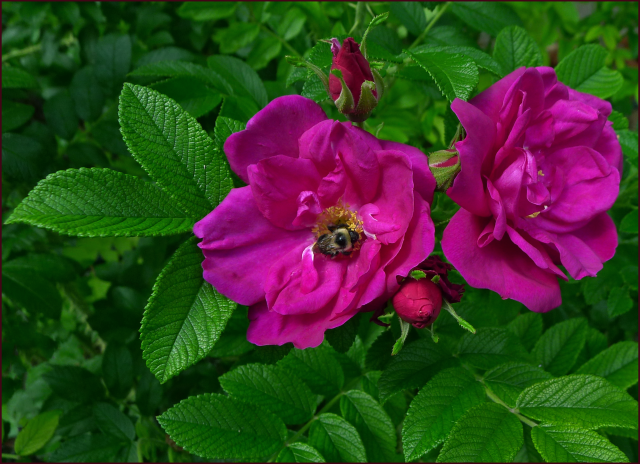
Mother Nature often brings her own contrasting textures to the party in a single plant; for example, foliage may have a glossy surface, and flowers have a lustreless surface, sometimes with a bit of nap, like velvet or nubuck.
Purple Pavement Rose

The glossy pinnate leaves of Rosa ‘Purple Pavement’ contrast beautifully with the softly sueded surface of the blooms. Photo: Sue Gaviller

Prickly Pear Cactus

A study in textural contrast: Prickly Pear Cactus has dangerously spiny foliage, but delicate papery blooms. Photo: Pat Gaviller

On the Edge

Variations in surface edges also impact textural appearance – smooth surfaces with edges that are ruffled, serrated, fringed etc. will seem more irregular, and finer textured as well. Keep this in mind when using plants that exhibit these characteristics.
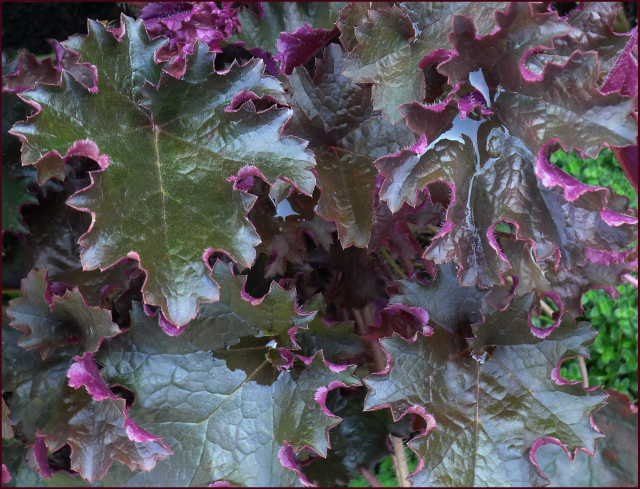
The large leaves of Heuchera 'Prince' are smooth with an intense sheen, but the ruffled edges cause the surface to appear more irregular. Photo: Sue Gaviller
The large leaves of Heuchera ‘Prince’ are smooth with an intense sheen, but the ruffled edges cause the surface to appear more irregular. Photo: Sue Gaviller

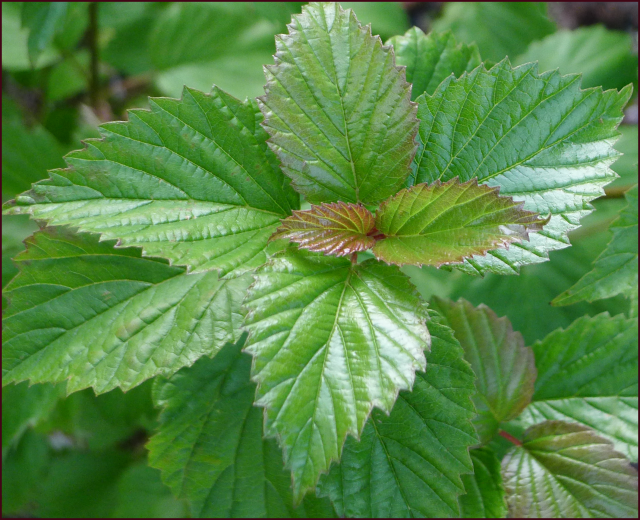
The feathery edges of Viburnum dentatum foliage perceptually alters their surface texture. Photo: Sue Gaviller

The jagged leaf edges of Viburnum dentatum perceptually alter their surface texture.
Photo: Sue Gaviller

As Time Goes By

Plant texture changes as a plant goes through its seasonal cycles and its life cycle – new growth may be smooth and shiny and older growth, duller or rougher. The formation of deadheads, seedheads or berries adds a new textural dimension as the season progresses.  Leaving these to develop may be desirable for visual effect, but depending on the plant, sometimes removal is better. And of course when woody plants enter winter dormancy, most will lose their leaves, exposing their textural bones.

Elaeagnus angustifolia

Elaeagnus angustifolia presents many unique textures – stems, petioles and pedicels appear silver and fuzzy, bark on young branches is shiny mahogany brown and mature bark on the trunk is rough and fissured, as seen in the photo earlier in this post. Edible berries form in late summer. Photo: Sue Gaviller.
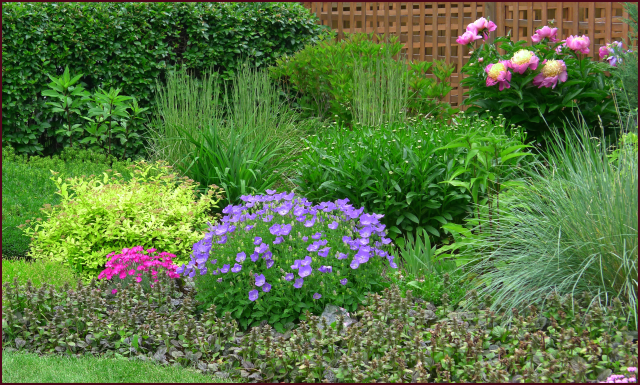
Much of this bed is edged with Ajuga reptans 'Catlin's Giant', a lovely creeping groundcover with large glossy dark leaves and pretty blu flowers. Here the flowers gave faded so should be removed so the leaf texture can be enjoyed.

Much of this bed is edged with Ajuga reptans ‘Catlin’s Giant’, a lovely creeping groundcover with large, glossy, wine-coloured leaves and pretty blue flowers. Here the faded flowers obscure the beautiful foliage – I’ll need to deadhead so the leaf texture can be enjoyed. Photo: Sue Gaviller
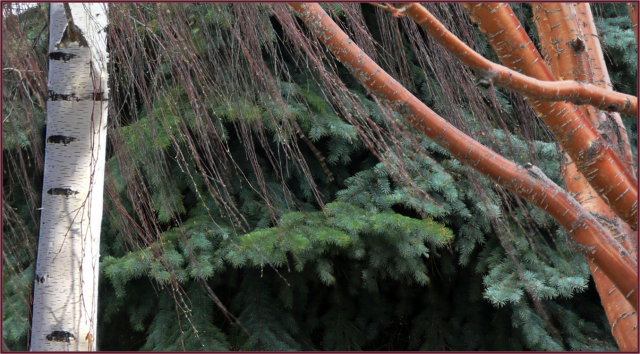
Bark and branches provide textural interest during long winter months. From left: Betula pendula, Picea pungens var. glauca and Prunus mackii. Photo: Sue Gaviller

Bark and branches provide textural interest during long winter months. From left: Betula pendula, Picea pungens var. glauca and Prunus mackii. Photo: Sue Gaviller

Texture in the garden has so much more impact than we realize – as I examine my own garden I recognize there are still areas that could benefit from some ‘texturizing’. As I wrap up this post I recognize there is still more I could add, like why have certain plants evolved with particular texture – Mother Nature has her reasons you know. But alas that will have to be the subject of another post.

So when you shop for new plant material, or play with what you already have, take note of what each has brought to the party before adjusting or expanding the menu.

Bon Appétit,
Sue

© Sue Gaviller and Not Another Gardening Blog 2012.

Unauthorized use and/or duplication of this material without express and written permission from this blog’s author and/or owner is strictly prohibited. Excerpts and links may be used, provided that full and clear credit is given to Sue Gaviller and Not Another Gardening Blog with appropriate and specific direction to the original content.
Weaving Your Garden – the Importance of Plant Texture

Over the last year or so I’ve talked much about form, texture and colour, both as they relate to individual plants, and in the garden as a whole – indeed these traits are the means by which plants relate visually to each other. When I wrapped up my 6-part series on Plant Form, I promised future detailed coverage on texture and colour in the garden. Today then I’ll begin the discussion on texture.

Where plant form gives a garden its structure, I believe it is plant texture that gives a garden its sensuality. Even the descriptors we use – words like velvety, satiny, ruffled, rough, fuzzy, lacy, delicate, succulent, leathery, strappy – denote a certain sensuality.

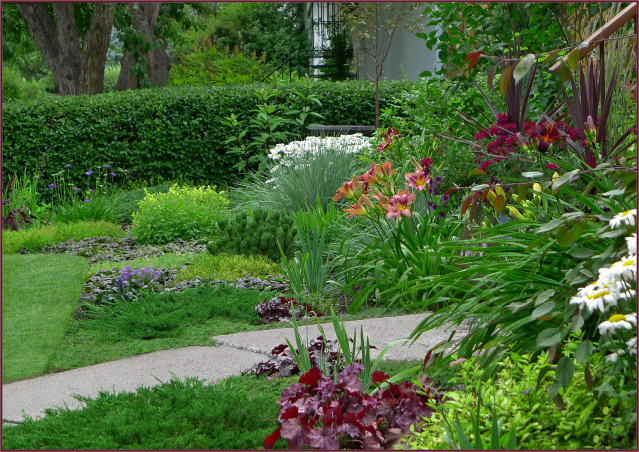
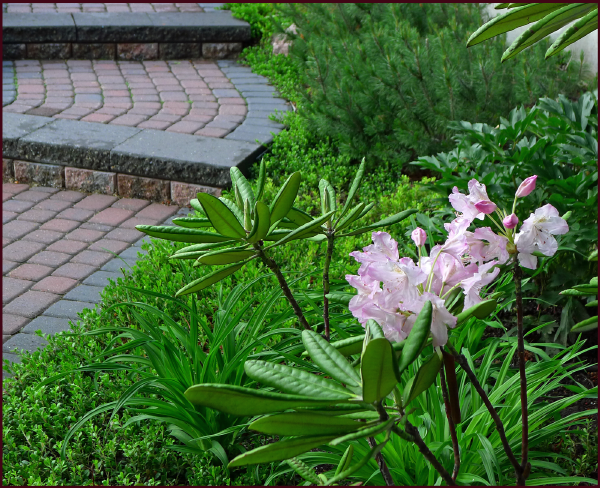
Foliage exhibits many different textures, creating a rich layered tableau in this client's front yard garden. Photo: Sue Gaviller

Foliage exhibits many different textures, creating a rich layered tableau in this client’s front yard garden. Photo: Sue Gaviller

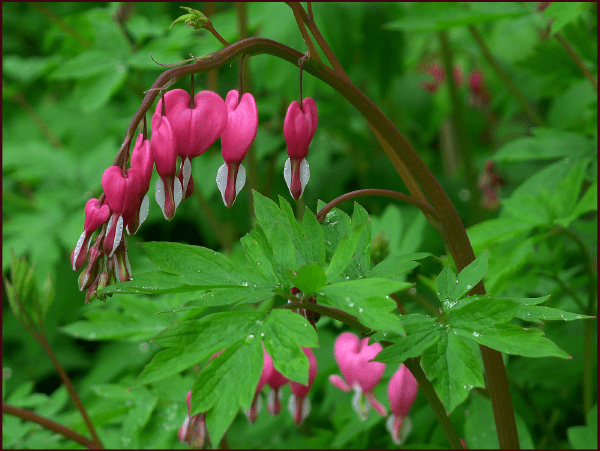
Lacy leaves and delicate, satiny flowers give the common bleeding heart very alluring texture. Photo: Sue Gaviller

Lacy leaves and delicate, satiny flowers give the common bleeding heart very alluring texture. Photo: Sue Gaviller

Velvety and ruffled, it is the texture as much as the colour of Hemerocallis 'Strutter's Ball' that afford it its luxurious appearance. Photo: Sue Gaviller

Velvety and ruffled, it is the texture as much as the colour of Hemerocallis ‘Strutter’s Ball’ that afford it its luxurious appearance. Photo: Sue Gaviller

So what exactly is plant texture? The word texture comes from the Latin word texere which means “to weave”. If we look at gardening as the weaving of a giant tapestry, we begin to understand why texture is such an important consideration in garden design – it makes a significant contribution to the overall picture. As a designer I use the word texture in referring to a) the size, shape and arrangement of a plant’s component parts, i.e. fine texture vs. coarse texture or b) the visual and tactile characteristics of a plant surface, i.e. rough vs. smooth.

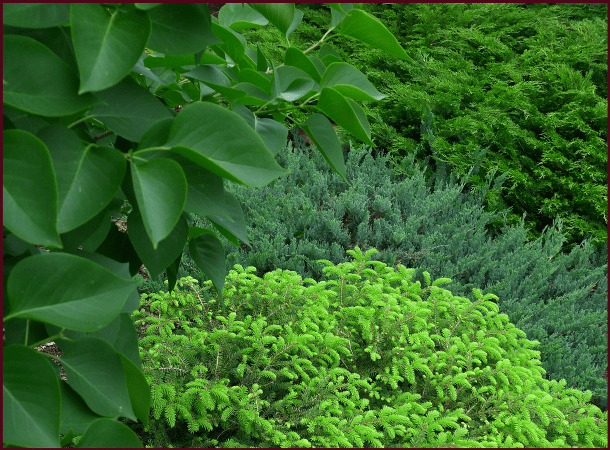
Coarse-textured Syringa vulgaris foliage (left) has a smooth leathery surface, fine-textured Picea abies 'Nidiformis' (bottom) has nubby-looking new growth, and Juniperus horizontalis 'Blue Chip' (middle) and Juniperus Sabina 'Calgary Carpet' (top) are both fine-textured and feathery. Photo: Sue Gaviller

Coarse-textured Syringa vulgaris foliage (left) has a smooth leathery surface, fine-textured Picea abies ‘Nidiformis’ (bottom) has nubby-looking new growth, and Juniperus horizontalis ‘Blue Chip’ (middle) and Juniperus Sabina ‘Calgary Carpet’ (top) are both fine-textured and feathery. Photo: Sue Gaviller

So let’s take a closer look….

Fine Texture

This casual composition would appear quite messy if it weren't for the very large leaves of Rogersia. Photo: Marny Estep

This casual composition would appear quite messy if it weren’t for the very large leaves of Rogersia.
Photo: Marny Estep

Plants with smaller individual parts (small or very narrow leaves) that are spaced closely together, are considered fine textured. These plants are important for building volume in the garden as well as setting the stage for coarse textured plants.

While fine texture should predominate in a composition, periodic interruptions with coarser texture are needed or the garden can appear busy – untidy even. I experienced this many years ago when I drove up to our house one summer afternoon and noted that a large area of the garden looked decidedly unkempt.

Approaching the offending composition, I tried to determine why it looked so messy – nothing was in need of deadheading, nothing was flopping over and it wasn’t particularly crowded. So I did what all gardeners do – took out some stuff, added some stuff, added some more stuff, yadda, yadda, yadda, more trial and error planting decisions, none of which solved the problem… until I planted some Heuchera. Its big bold leaves seemed to be just what was needed, and while I likely intuited that it was the textural contrast of large leaves with the airier texture of yarrow, spirea and juniper, I certainly couldn’t have articulated that “too much fine texture with no coarse texture to punctuate” was the problem. In fact it really wasn’t until I began to study design that I figured it out – one of those light-bulb moments while listening to my design instructor discuss texture.

It’s important to note that small leaves or flowers which are very tightly packed result in visual weightiness. For example spruce needles, though fine and narrow, are very closely spaced and very rigid, hence the plant appears heavy. Cedar and juniper are also fine-textured, but the foliage is much more open thus appears airy and weightless. Making this distinction will help you effectively balance and contrast lightness and weight when choosing and placing fine textured plants in your garden.

evergreen texture

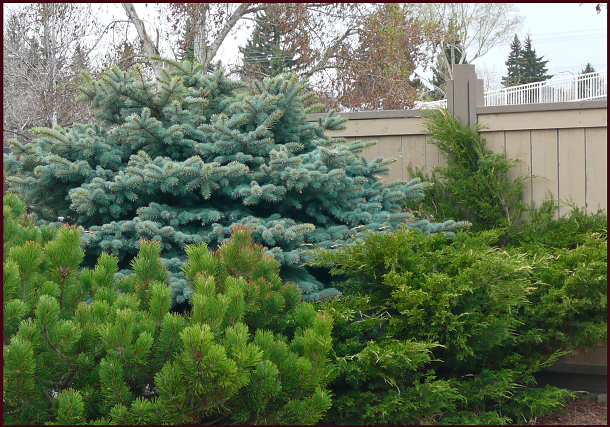
While all evergreens exhibit fine texture, very tightly spaced, rigid needles like those of Pinus mugo (bottom) and Picea pungens ‘Globosa’ (top) result in a weightier presentation than the lighter feathery foliage of Juniperus chinensis ‘Mint Julep’ (right). Photo: Sue Gaviller

Coarse Texture

Plants with large individual parts spaced further apart are coarse textured. They have a dramatic, almost tropical appearance which draws the eye and gives it a place to rest – this grounds and unifies a composition. Coarse texture is dominant to fine texture and should therefore be used more sparingly – too much of it creates competition for dominance, which in turn can cause visual unrest.

Hosta, daylily and kinnickinnick

Large lush leaves of Hosta ‘Zounds’ unify and ground a tangle of kinnickinnick and daylily foliage. The understated toad sculpture plays a supporting role. Photo: Sue Gaviller

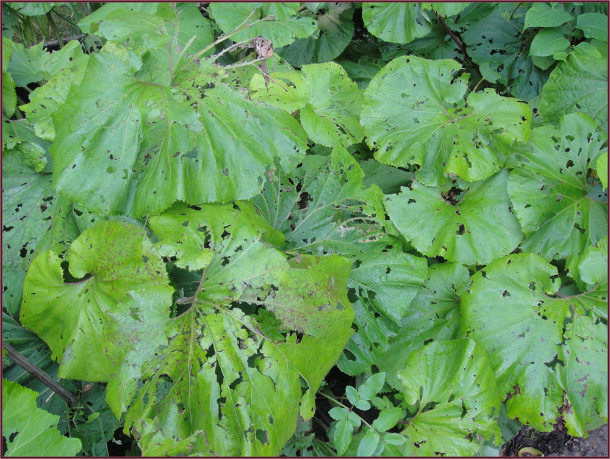
Unfortunately, many plants with very large leaves are susceptible to damage from hail, wind and frequently, slugs. It is therefore important to situate them appropriately – protected by a fence, tree or building and in conditions that are moist enough for the plant to thrive but not so wet that slugs also thrive.

Large leaves, lovely as they are, can be reduced to tatters from hailstorms and slugs. Photo: Diana Lane

Large leaves, lovely as they are, can be reduced to tatters from hailstorms and slugs.
Photo: Diana Lane

Rhododendron seems coarse in relation to the red-leaved Berberis thunbrgiss 'Cherry Bomb', but much finer relative to Hosta 'Sum and Substance'.Photo: Sue Gaviller

Rhododendron seems coarse in relation to the tiny red leaves of Berberis thunbergii ‘Cherry Bomb‘, but much finer relative to the much larger leaves of the Hosta.
Photo: Pat Gaviller

Texture is of course relative; for example, rhododendron foliage may appear coarse next to periwinkle or kinnickinnick, but seem much less so beside Hosta. The key here is contrast – if every plant has leaves and/or flowers of similar size, monotony will result. Instead, a variety of textures; fine, medium, coarse and in-between, will ensure an exciting, balanced composition – the coarser the texture, the less you use.

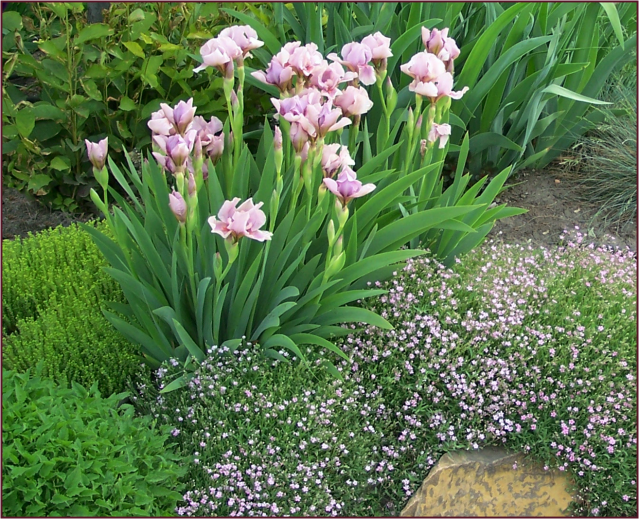
The flowers and foliage of Gypsophylis repens ‘Rosea’ are very fine textured, whereas Iris leaves and blooms exhibit much coarser texture – the result textural contrast paints a lovely picture. Photo: Cathy Gaviller

The flowers and foliage of Gypsophila repens ‘Rosea’ are very fine textured, whereas Iris leaves and blooms exhibit much coarser texture – the resulting textural contrast paints a lovely picture. Photo: Cathy Gaviller

Keep in mind too that foliage consisting of more than one colour – variegated, veined, mottled etc., will appear finer textured. This is especially evident if the variegations are small and closely spaced, and less so if larger blocks of colour make up the variegations, for example a green Hosta with white or cream margins.

bicolour foliage resize

The large leaves of Heucherella ‘Berry Fizz’(left), Tiarella ‘Crow Feather’ (right) and Aegopodium podagraria (bottom) appear more finely textured than they actually are, due to their bicolour pattern. Photos: Sue Gaviller

Hosta and Lamiastrium resize

Lamiastrum galeobdolon ‘Herman’s Pride’ and Hosta spnote how the very busy variegation affects the perceived texture of the finer textured plant, but the big blocky variegations of the larger hosta leaves only slightly affect its coarseness. Photo: Pat Gaviller

Now go outside and take a look at your garden composition – is there something you don’t like about it? Instead of just throwing more plant material at it this season, examine it from the perspective of contrasting and balancing fine texture, coarse texture and in-between texture – maybe you just need to rethink it.

Join me for more sensuous plant talk in my next post as I take a look at surface texture.

Til Then,
Sue

© Sue Gaviller and Not Another Gardening Blog 2012.

Unauthorized use and/or duplication of this material without express and written permission from this blog’s author and/or owner is strictly prohibited. Excerpts and links may be used, provided that full and clear credit is given to Sue Gaviller and Not Another Gardening Blog with appropriate and specific direction to the original content.

Say It Ain’t So

Sitting at my computer this morning, faithfully writing my long-promised article on texture in the garden, my husband pokes his head in my office. “Hey,” he says, “Did you read the article in the paper about diseased trees in Calgary?” I hadn’t read it yet, so he elaborates a little, saying that according to the article, the recent harsh winters and wet springs are causing some problems with trees around the city. Of course he’d only skimmed the piece, because if he’d read the whole thing he may have thought better than to steer me towards it.

I get up from my desk, head to the kitchen for my coffee and open the weekly Garden Section. Finding the article I begin perusing it. “The city’s trees are under attack…..blah, blah, blah…..it’s an epidemic…..blah, blah, blah…..two main problems…….blah, blah, blah…..an outbreak of caterpillars…..blah, blah…” – say what? Back up the worm wagon! Did you say caterpillars?

Telling myself to relax, I think, “Oh it’s probably just leaf rollers or cabbage worms they’re referring to. Phew!” But then I remember the other day, while canvassing for the Diabetes Association’s spring campaign, I noticed what looked suspiciously like a tent caterpillar crawling on the wall of a neighbour’s house – I knocked it down, stomped on it and told my puzzled neighbour she should do the same if she ever sees another.

At this point I begin to get a real sinking feeling in the pit of my stomach, so I keep reading……“mobs of crawling black caterpillars,” and finally the dreaded words, “forest tent caterpillar”. Ugh! Blech! Yuck! No, not here! Please say it ain’t so!

Now those of you who know me as Sue the fearless gardener, and have watched simultaneously impressed and disgusted, as I hand-pick slugs and step on them, squish cabbage worms with my fingers, or run an aphid-infested stem between my thumb and forefinger crushing them all in the process, my apparent phobic response to the beastly tent caterpillar may come as a surprise to you. But if you knew me as a teenager, living on the shores of Georgian Bay in rural Southern Ontario, you might recall a very different scene – me out riding my horse on a country road and squealing as I rode under a tree dangling with hundreds of the wiggly worms; or me recoiling in horror at the sight of huge dark masses of them on the aspens and birches that surrounded our country home, or the monster specimen I found crawling on a wall inside our house – I have the heebie-jeebies just writing this. Seriously, these things freaked me out so much that I’d carry an umbrella just to walk from the house to the car because the creepy critters literally fell from the sky (well from the trees actually).

So you can imagine my horror, when after living in Calgary for the last 3 decades, blessed with a caterpillar-free existence, I discover my little bubble has been burst. I’d of course heard mention of swarms of tent caterpillars in Northern Alberta and even as close as Cochrane, but I have never seen a single one in Calgary in all the years I’ve lived here! So yeah, I’m a little squeamish to the say the least, at the thought of an incursion of Malacosoma disstria into our fair city. But the dreaded forest tent caterpillar is more than just a nightmare for girly-girls like me – it can cause significant damage to a tree, indeed to whole forests, as they munch their way through leaf after leaf, tree after tree.

My last experience with them was a few decades ago when my husband and I decided to honeymoon at a beautiful resort in the Halliburton Highlands of Northern(ish) Ontario………………in June – the height of black fly season, mosquito season, and about the time the yucky caterpillars begin their trek, down from the trees, across streets and highways, to I-know-not-where. Yikes! What were we thinking? Anyway, driving through parts of the province, we could see the huge tracts of defoliated aspen forest. Barren. Trees with no leaves. It’s an alarming sight to say the least, and while most trees can refoliate within a few weeks, if defoliation occurs three or more years in a row, considerable tree mortality can result.

To make matters worse, when the mass migration of caterpillars crossed major roads, the result was millions of squished creepy-crawlies, making the roads greasy and the driving hazardous.

While the population of tent caterpillars is cyclical in nature, at least in the East, I have no intention of letting them spin their sticky strands on any of my trees or shrubs. So if you’ll excuse me I’m off to examine my leafy friends to look for signs of caterpillar activity, and for the sake of this girly gardener’s peace of mind, I ask that y’all do the same.

And I promise my next post won’t be about beasty bugs or birds – I have something more sumptuous for you to look forward to.

Til then,
Sue
 
© Sue Gaviller and Not Another Gardening Blog 2012.Unauthorized use and/or duplication of this material without express and written permission from this blog’s author and/or owner is strictly prohibited. Excerpts and links may be used, provided that full and clear credit is given to Sue Gaviller and Not Another Gardening Blog with appropriate and specific direction to the original content.
Weekly Plant Pick

Just a quick note to let y’all know my Weekly Plant Pick page, which was on hiatus for the winter and early spring, has been re-activated as of a few weeks ago. At the beginning of each week (either Sunday or Monday), I’ll profile a tree, shrub or perennial that I’m particularly impressed with. For a plant to merit a spot on the Plant Picks page, it must offer season-long appeal (even when not in bloom), exceptional hardiness, easy care, etc.

So head on over there and see what I’ve got for you.

Cheers,
Sue

Maggie and Miss Sue

Maggie lived in a big nest in a tall tree. Every night she snuggled up in the nest with her family – Mom, Dad, Brother and Sister. Every morning when her mom and dad headed out to find food for the family, Maggie and her brother and sister would go to Miss Sue’s garden.

“You’ll be safe here,” her mother said. “Stay on the fence and bask in the sun, and if the sun gets too hot you can take cover under the bushes. And you can drink or cool off in that big bowl of water.” Maggie thought this was a fine place to spend her days.

The three young birds had barely fledged so couldn’t really fly yet, except to scramble back up onto the fence from the ground or the nearby bird bath. They weren’t allowed to venture very far from the fence – not until they could fly well enough to flee from danger. So they were content to sit there quietly on the fence, the three of them perched side by side, until their parents returned.

Well……….maybe not very quietly.

Miss Sue was awakened at sun-up to a loud ruckus just outside her bedroom window. “Magpies,” she muttered, “they’re so loud and obnoxious. What on earth are they squawking about so early in the morning and why are they right outside my window?” She rolled over, pulling her pillow over her head and tried to find her way back to slumber. Nope, not happening.

Miss Sue thought about the first time she’d ever seen a magpie – she had just come West on the train and would be staying with a friend of one of her travelling companions. They were met at the train station by a nice-looking, though humourless, young man with a huge moustache. He drove them to his home just east of the city, where they could stay until they made other arrangements. As they drove along the country road, Miss Sue noticed a menacing cloud in the distance – not dark and grey like a thunderhead, but dirty brown.

“What is that?” she asked.

“Sandstorm,” replied Mr. Mustache matter-of-factly. “Better hope we don’t get caught in it,” he continued, only slightly less matter-of-factly. Miss Sue decided she didn’t much like Mr. Mustache and hoped she and her friends would find other lodging before too long. She stared out at the gathering dust clouds. A twiggy, barrel-shaped object tumbled across the road, then a few more. “Tumbleweed,” said Mustache, as if reading her thoughts.

Seriously? Sandstorms? And tumbleweed?  “I guess this really is the Wild West,” she mused. She half expected to see Hoss and Little Joe riding along the road.

A flash of cobalt blue caught her eye – a large black and white bird with a shiny blue tail alit on a fence post. “What a beautiful bird,” she thought aloud.

“That’s a magpie – they’re nothing but noisy scavengers,” snorted you-know-who. There were no magpies where Miss Sue came from. She thought they were beautiful, despite Mr. Mustache’s proclamation.

A few minutes later they arrived at their destination – a large country home apparently rented by six fellows who were quite the partiers. Miss Sue stayed there for a week or so but remembers very little – every day was pretty much a party at the big house. She did however learn to despise magpies, and in the several decades since, has never seen another sandstorm.

More squawking jolted Miss Sue back to the present. “Why don’t they shut up,” she growled.

“What’s wrong?” asked her husband.

“Stupid magpies woke me up,” she answered, but he’d already fallen back asleep. Her mind wandered again – this time to a conversation with a couple of family members. By this time she’d become an avid gardener and regularly shooed the beasty birds from her pretty bird-bath. “This isn’t for you,” she’d scold them, “It’s for nice birds.”

Her sister and brother-in-law once witnessed this – they were both biologists involved with wildlife rehabilitation. “You wouldn’t feel that way if you’d ever hand-raised a magpie,” one of them commented.

“Have you ever seen a baby magpie?” the other asked.  “They’re really cute! You would love them if you’d seen their babies, and how well their parents take care of them.”

Miss Sue scoffed at the memory. “Fat chance,” she thought, before finally falling back asleep.

But then she hadn’t met Maggie yet.

Maggie sat on the fence and watched her mom and dad fly off, their big beautiful wings and long graceful tails glossy black and opalescent blue. “One day I will be beautiful like them,” she thought, “and I will soar high in the sky.” She peered down at her fluffy black breast and snow-white tummy, wishing her soft downy covering would be replaced by real feathers. She looked around at the stump of a thing that would one day be a tail and willed it to elongate. It did not. It was still a stub. She sighed, “When will I ever grow up?” Maggie closed her eyes and dozed in the morning sun.

She awoke from her nap to the familiar sound of her parents’ voices – they’d returned with food. “C’mon kids. Breakfast!” cried Mom. The little birds hopped down off the fence, through the shrubs and flowers, and onto the lawn where their parents awaited with their gourmet loot.

“Me first,” said Brother.

“No me,” yelped Sister.

“I want some,” cried Maggie. Magpie youth are very vocal at feeding time.

There was plenty for everyone though.

Miss Sue opened her eyes and looked at her clock – 9:00AM. Pleased that she’d managed to get a little more shut-eye after dawn’s rude awakening, she felt slightly less annoyed at the boisterous magpie-song outside her window.

Her husband was already up. “Want coffee?” he asked. That was really a rhetorical question on any given morning.

“Yes thanks,” she replied. A beautiful morning in late May, Miss Sue decided to sit out on the front porch with her coffee. This was her favourite time of year – the transition between spring and summer, with its aromas of fresh-cut grass, Mayday and apple-blossom, even the sun itself seemed to have a scent. She took a deep breath, basking in the anticipation of a new garden season, and then began the visual scan of her front garden that was part of her morning ritual. First to the left, then the right, looking for the daily changes that mark the seasonal evolution of a garden, her eyes rested on three little black and white balls of fluff sitting atop her fence – the fence just feet from her bedroom window.

“Well hello there cutie-pies,” she cooed.  “Are you the source of all that noise?” Remembering her sister’s words about baby magpies, she smiled, “I guess sis was right.” Miss Sue thought these little birds were just about the cutest thing she’d ever seen.

Two of the fledglings sidled away from the voice, but the other one, the smallest of the three, seemed to like the sound of it – it appeared to recognize that Miss Sue was friendly, unthreatening. She looked straight at Miss Sue and Miss Sue looked straight back at her, and in that moment………….well let’s just say Miss Sue was smitten with these little black and white babes – especially the littlest one, whom she affectionately named Maggie.

Every morning Maggie sat on the fence eagerly waiting for Miss Sue to come out and play – well really just to sit on the front step and drink her coffee, but to Maggie, seeing Miss Sue there made everything seem right. The world was a safe place when Miss Sue was around. She would shoo away the neighbourhood cats who tried to stalk the little birds. She’d remind the little lad next door when he chased after the baby birds trying to pet them, that it just frightened them.

One day Miss Sue was chatting with a neighbour, gushing about the little birds and how cute they were. Maggie overheard snippets of the conversation. “They’ll grow up to be nasty birds like all magpies – they should all be shot,” she heard the other woman say. Maggie hoped Miss Sue wouldn’t be swayed by these words. It never occurred to her that everyone wouldn’t be as enamoured of her as Miss Sue was. She worried that maybe the world wasn’t such a safe place after all, with so many hating her kind.

Miss Sue finished her conversation and returned to her perch on the front step. She looked at Maggie and said, “Don’t worry girl, I’ve still got your back.” Maggie was relieved to know that Miss Sue was still her friend. She was troubled though.

That night, as her mom was tucking her into bed, Maggie asked, “Mommy why do people hate us?”

Mother Magpie’s heart sank – she had hoped her children would never have to know fear or hatred. “They hate us because they don’t understand us,” she replied. “They think we’re just noisy scavengers.” Mother Magpie continued, “I guess we are kind of a raucous bunch, especially our teenagers, but that’s just the way God made us. Humans forget that their own teenagers are also very noisy, with their loud music and boisterous manner. All humans are pretty noisy for that matter – all those things on wheels with loud engines; kind of hypocritical when you think about it.”

“We’re so much more than just noise makers though,” she went on. “Our proud ancestors once rode the backs of the great buffalo, keeping them clean of pesky ticks. In fact our diet consisted almost entirely of these blood-sucking insects.” Maggie thought this sounded disgusting. She much preferred the thought of yummy bread crusts and apple cores. But she listened intently as her mother spoke of the near extinction of the buffalo and how resourceful her ancestors had been in moving from a specialist diet to that of a generalist.

“What’s a specialist diet?” asked Maggie.

“It means we were picky eaters,” her father quipped winking at his mate – Father Magpie liked to add his two-cents-worth.

“What’s a generalist?” continued Maggie.

Mother Magpie opened her beak to answer but Pops beat her to it. “It means we’ll eat any old crap now,” he snorted. Maggie giggled at her father’s words. Trust Mr. Magpie to inject a little levity into even the most serious discussions.

Maggie felt better, though she was surprised to learn that grasshoppers, cutworms and other insects were still the current diet of many of her relatives – she didn’t envy them. Her mom had said this meant they were very important to farmers and gardeners – like Miss Sue. Maggie felt very proud to be a magpie and drifted off to sleep dreaming of a great adventure riding the buffalo.

Miss Sue found the antics of the three fledglings most entertaining. She watched as the two larger ones became more adept at flying, venturing a little further from the fence, to the roof of the neighbour’s house or the nearby green ash tree. The little one tried heroically to fly but invariably ended up on the ground, where she’d manoeuvre about with a hop-hop, toddle-toddle, flutter-flutter, flop……………..hop-hop, toddle-toddle, flutter-flutter, flop.

Curiosity would often lead her further from the fence than she was supposed to go. Her parents would come back with food and squawk at Maggie. Miss Sue imagined they were chastising the little bird for not being where she was supposed to be. Maggie reminded Miss Sue of herself when she was young – precocious and wanting to grow up so much faster than was possible, or even healthy.

It got her into loads of trouble.

Maggie was bored. Sister and Brother were now able to fly – they were good little birds and never went far, but it still meant she had no one to keep her company most of the time. Maggie wanted to be a good bird like her siblings – indeed she tried very hard to be a good girl, but left to her own devices, she would wander off in search of something interesting.  “Maggie!” her parents would scold, “You’re to stay close to the fence where it’s safe, until you’re able to fly.”

“But when will that be?” she whined.

“Soon enough my child, soon enough,” her mother assured her. But nothing ever happened soon enough for Maggie. She wanted, indeed had always wanted, to be a grown-up – to do grown up things and have grown up adventures.

One day, as Maggie sat on the fence waiting for something exciting to happen, she noticed a beautiful Swallowtail butterfly flitting around the garden. As it neared her, she thought to herself, “What a pretty creature. I wonder where it’s going.” Maggie tried to launch herself into flight to follow it, but as usual she toppled to the ground. She hopped along after it trying to keep up, but after a while she lost it and ceased her pursuit.

Maggie peered around and realized that nothing looked familiar – she couldn’t see the cranberry bushes or the pink peonies or even the bright white daisies which always served as a beacon to guide her back to her sunny perch on the fence. Instead Maggie found herself in a shady damp place with dark leafy plants like periwinkle and Rhododendron. She was a little frightened and wished she had heeded her mother’s warnings about venturing too far from the fence.

“How will I ever get home?” Maggie thought. She decided to stay put among the Rhodos and wait. She really missed her mom and dad, and her brother and sister.

After what seemed an eternity, Maggie heard the faint sounds of her mother calling in the distance. The voice got closer. “Maggie!” her mother called with a mix of urgency and annoyance. “Where are you?”

When at last Maggie could see her mother’s shadowy figure through the bushes, she tumbled out from her hiding spot. “Mommy, Mommy, Mommy,” she cried. “I missed you soooo much,” and she began rushing towards her mother – hop-hop, toddle-toddle, flutter-flutter, flop, hop-hop, toddle-toddle, flutter-flutter, flop as fast as her little legs and wings could take her.

Mrs. Magpie was both relieved and furious – she had been so worried. But watching her daughter’s frantic approach, she couldn’t bring herself to be angry. All she could do was raise her great big wing and let Maggie collapse into her motherly embrace.  “Mommy, Mommy, Mommy,” Maggie repeated. “I missed you soooo much.”

From her bedroom window, Miss Sue watched this little drama unfold – she didn’t know whether to laugh or cry.  Maggie’s frenzied attempt to reach her mother was comical to be sure, but the ensuing ‘mother and child reunion’ was one of the most poignant moments she’d ever witnessed. It reminded her of the time she momentarily lost sight of her pre-schooler in a department store. She’d taken her eyes off him for mere seconds to check a price tag on a piece of clothing – and he was gone. Since he was of course much shorter than the racks of clothing, Miss Sue couldn’t see him and he couldn’t see her – indeed it must have seemed rather like a maze to him. Frantically searching and calling his name for what seemed like hours, but in reality was only a minute or so, she finally saw him peek out from behind one of the racks.

“Yeah Mom?” he’d answered, wide-eyed but not scared. Miss Sue scooped him up in her arms and held him tightly, crying and laughing and scolding all at the same time. Yes Miss Sue knew exactly what Mother Magpie had experienced while looking for Maggie. (Perhaps I anthropomorphize a little here).

A week or so later, Miss Sue was inside having lunch when she heard the familiar sound of magpies squawking. Assuming it was feeding time, or that Maggie had gotten herself into trouble again, Miss Sue just smiled and ignored the noise coming from her front yard. The squawking got louder and more urgent until Miss Sue eventually got up and went outside to see what the ruckus was. She looked around but saw only Maggie sitting on the edge of the bird bath.

“What is it girl?” she asked, scanning the yard to see if perhaps a cat was stalking the young bird. Maggie started squawking again until Miss Sue looked right at her.

She seemed to be saying, “Miss Sue, Miss Sue, look at me. Look what I can do,” and she fluttered her wings a little. Then with great will and determination Maggie lifted herself off the bird bath, flapping her wings ferociously, and flew all the way to the other side of the yard into the neighbour’s tree. Miss Sue beamed with pride much like she had witnessing her children take their first tentative steps.

“Atta girl Maggie,” she said softly. “You can fly!”

She saw very little of the young magpies after this – they were all able to accompany their parents on their food-finding missions now. Sometimes as Miss Sue walked or drove down her street, she would see the noisy family of five – three adolescent birds still clamoring for food from their very patient parents. She’d smile a bittersweet smile and feel blessed to have had the chance to see these three babes grow into young adults.

On a cool, late fall afternoon, as Miss Sue was putting her garden to bed for the winter,  a large magpie flew down and elegantly alit on the fence – in the exact spot she had first seen Maggie.  Miss Sue knew intuitively it was Maggie and she knew the beautiful bird she’d watched grow up, had come to say goodbye. Maggie looked at Miss Sue and let out a little gurgle and a soft squawk. Then she took wing. Miss Sue watched Maggie fly off, her big beautiful wings and long graceful tail glossy black and opalescent blue.

“I’ve still got your back girl,” she whispered, and went inside.

~   The End   ~

Maggie. Photo: Sue Gaviller

Photo: Sue Gaviller

This story was based on my experiences with a trio of fledgling magpies that spent the better part of a summer perched on my garden fence.

Enjoy! 
Sue
© Sue Gaviller and Not Another Gardening Blog 2012. Unauthorized use and/or duplication of this material without express and written permission from this blog’s author and/or owner is strictly prohibited. Excerpts and links may be used, provided that full and clear credit is given to Sue Gaviller and Not Another Gardening Blog with appropriate and specific direction to the original content.

Pretty in Pink

Everything’s popping up pink along city boulevards, in parks and front yards – the first of the spring-flowering shrubs are strutting their stuff.  These pretty ladies are various species of the Prunus genus, a large genus that includes peaches, plums, cherries, apricots and almonds. In Calgary, the current explosion of pink blossoms comes from 3 different species.

Prunus tomentosa is first on the scene, with pale pink flowers that present before the leaves.  Commonly known as Nanking Cherry, this medium to large shrub is native to China, Korea and the Himalayas. It has been cultivated in North America since early last century, providing a drought tolerant, cold hardy (Zone 2) shrub that grows to a height and spread of 2–3 metres. It produces small tart cherries that are excellent for jams and jellies.

Prunus tomentosa

Pale pink Prunus tomentosa is a common sight on city boulevards. Photo: Sue Gaviller

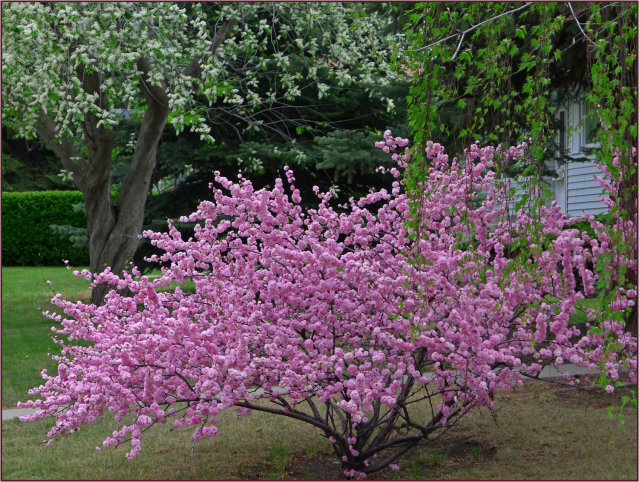
Prunus triloba multiplex, the double-flowering plum, is by far the showiest of the three, its large double pastel-pink blossoms like cotton-balls along the many arching stems. A very vigorous grower, reaching 2–3 metres tall and wide, it will benefit from periodic pruning to remove any crossed or rubbing branches. This variety is sterile and doesn’t produce fruit.

Prunus triloba multiplex. Photo: Sue Gaviller

Prunus triloba multiplex. Photo: Sue Gaviller

Prunus tenella (Russian almond) is a smallish shrub with an upright vase shape and narrow green leaves that appear at the same time as the medium pink flowers. It’s compact and tidy, reaching only about 1 metre in height and spread. Very fragrant too, it is much underutilized in the urban landscape.

Prunus tinella. Photo: Sue Gaviller

Prunus tenella. Photo: Sue Gaviller

Despite their similar appearance when seen from a distance, these three shrubs have very different blossoms. Left – Prunus tomentosa. Middle – Prunus tenella. Right – Prunus triloba multiplex.  Photos: Sue Gaviller

Despite their similar appearance when seen from a distance, these three shrubs have very different blossoms. Left – Prunus tomentosa. Middle – Prunus tenella. Right – Prunus triloba multiplex.
Photos: Sue Gaviller

Design Value

Many designers eschew the use of these shrubs because they’re “old fashioned”. It’s true they are, but they still have design value. They’re right at home in a Naturalistic garden and are especially useful in Asian-inspired or Colonial style gardens – and they’re reliably floriferous too.

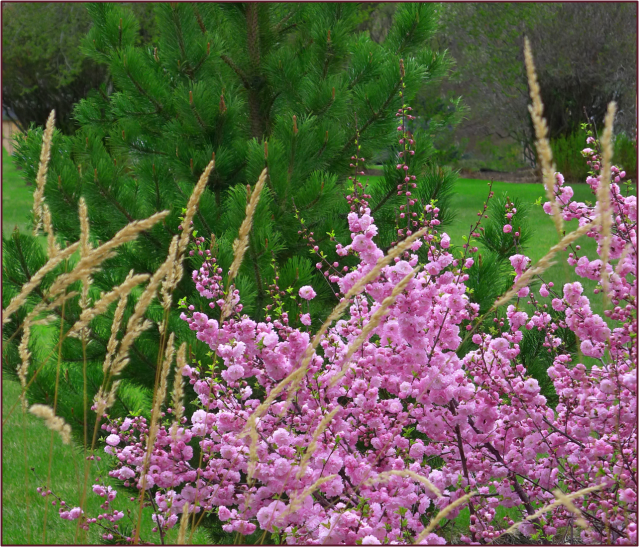
A naturalistic planting of grasses, pine and double flowering plum in a local park.  Photo:Sue Gaviller

A naturalistic planting of grasses, pine and double flowering plum in a local park.
Photo: Sue Gaviller

Prunus tomentosa is lovely in front of the Asian inspired fence I designed for a client. Photo: Sue Gaviller

Prunus tomentosa is lovely in front of an Asian-inspired fence I designed for a client. Photo: Sue Gaviller

When finished blooming, their design worth is more as a backdrop than a showpiece. Nanking cherry and flowering plum both have a lovely natural vase shape, as well as dark green, medium-coarse leaves which provide nice contrast to other brighter plants. Russian almond is much finer textured with lighter green leaves – together with its very upright branches, also provides good contrast in the landscape. And as woodies, they all offer much-desired structure to our gardens.

Perhaps it’s time to rethink these old-fashioned beauties – charm and grace come with age you know.

Til next time,
Sue

Healing Spring

It seems at this time of year I go from zero to 100 in the space of a few days. While I usually have several designs to work on over the winter, the pace is very relaxed – no pressure, just creative calm. Except I don’t pace myself – I languish throughout the early winter months, then as spring approaches I must hustle to complete my winter projects. Still, spring comes in fits and starts, so even then there’s a little breathing space… until now. Warmer weather is finally here, and while my fellow gardeners are out playing in the dirt, I am playing catch-up so my clients can have their designs, and my landscape contractors can start getting to work – like tomorrow. Zero to 100.

When I first became a designer, I naively thought it would be a rewarding way to make some extra money to spend on my own garden. Don’t get me wrong, I love what I do – it is very rewarding, and while I do indeed have extra money to spend on my own garden, I now have very little time.

So today I work in my garden – cleaning up the refuse that remains after last year’s early snowfall, and breathing in the burgeoning spring, late as it is. It was a difficult winter for me – not just because it was unusually long, but because life brought some unwelcome challenges. I’ll spare you the details (despite the very public nature of blogging, I am a very private person) and say only that nursing someone dear to me through a broken heart has been a very painful experience. Sobering it is too, accepting that words – no matter how wise or comforting – cannot heal. Only the passage of time can do this.

Time. Is she enemy or is she friend? She oft dawdles behind us… then gets way ahead, sometimes giving too much of herself and more frequently, not enough.

C.S. Lewis, the great Christian apologist, believed that humans are discomfited by the concept of time because we are actually timeless beings imprisoned in a time-stamped existence, and only in the “great beyond” is there timeless joy. Of course the subject of this blog isn’t theology or philosophy, but I often find that when working in the garden, tending the ground, my thoughts ironically turn to the cosmos, the ethereal.

As gardeners, we tend to think of time as the enemy, or at the very least, a big ol’ thorn in our side – I mean we’re always waiting for something, right? But as I rake the blanket of leaves off awakening perennials, watching the ladybugs scurry off, it occurs to me that it is time that has brought me here, to this simple healing moment.

A Red Admiral butterfly flutters past. A pair of nesting crows coo at each other in a nearby tree. Finch-song and robin-twitter float on the breeze. Overhead a Prairie Merlin squeals, as if sounding the all-clear to trees and shrubs that it’s safe to leaf out. All around life erupts in the symphony that is spring. Yes we must make peace with time, knowing she is both harsh mistress and nurturing healer – the passing of the seasons bears witness to this.

A week or so ago my sister Pat and I took a drive out of the city. Turning a corner onto a gravel road I noticed a flurry of avian activity – as we drew closer, a smallish very bright blue bird alit on a fence post. “Bluebirds,” Pat exclaimed. I caught my breath and whispered “I’ve never seen a bluebird before.” Growing up on an acreage in Southern Ontario, one would think this bird would have been a common sight, but for reasons I can’t remember, the native Eastern bluebird had become quite rare in the area. My mother spoke of them with great reverence, and catching sight of one would be an unlikely, though extraordinary occurrence. And I’m not much of a hiker, so since moving to Alberta more than 3 decades ago, I’ve never seen a Mountain bluebird either. But here they were, a whole bunch of them, apparently arguing over who got to nest in the birdhouse affixed to the fence post.

We drive on, eventually reaching a dead-end where we turn around – we find another fence-box housing a mated pair of bluebirds. The intensely hued male perches on guard a few metres away, not knowing he’s being a most co-operative photo subject. I snap a few shots. Pat snaps many more.  “The Bluebird of Happiness,” she says softly, referencing a phrase oft used in songs and literature to lift spirits and welcome a new day.

Yesterday she sent me one of her bluebird photos in an email with the message “May the bluebird of happiness take your pain away – & all that schlock”

Bluebird

Photo: Pat Gaviller

Time it seems has transformed my “winter of discontent”, at long last, into Healing Spring.

So to my fellow gardeners patiently waiting for prized perennials to rise from the ashes of winter, to all who are sick or in pain patiently waiting for time to heal you, and to my wounded loved one – may the warmth of spring wash over you, bringing new life.

…. and all that schlock.

Yours,
Sue
© Sue Gaviller and Not Another Gardening Blog 2012.Unauthorized use and/or duplication of this material without express and written permission from this blog’s author and/or owner is strictly prohibited. Excerpts and links may be used, provided that full and clear credit is given to Sue Gaviller and Not Another Gardening Blog with appropriate and specific direction to the original content.
The Form of Things to Come – Part 6

I promised myself I wouldn’t begin today’s post with comments or complaints about our wintry weather as I did in three of my last four posts. I don’t want readers to get the erroneous impression that Canada is the land of perpetual ice and snow. Nor do I want readers to think all Calgarians are a bunch of weather-whiners. And I certainly don’t want you to think that whining about the weather is my shtick – the hippy dippy weather girl, or that it’s the only intro I can come up with. Because it’s not. I have plenty of clever intros up my sleeve – clever is my middle name. So how about this… nah, okay then how about…. dagnabbit, folks that’s all I got today. I just wanna whine about the weather okay?

Correct me if I’m wrong fellow Calgarians, but has it not been an extraordinarily long winter? I know it’s only the middle of April but Spring isn’t even trying anymore. She just teased us and left us high and dry – well more like cold and wet. Even my stoic husband, who chides weather-whiners for bemoaning that which they can’t control, has on two recent occasions grumbled about the weather. “This weather is sucking the life out of me,” he lamented last night.

Today I look out my window at snow-covered branches, knowing there’s more snow in the forecast – I don’t even think it makes for a pretty picture anymore. I feel like I’m in Narnia under the white witch’s rule – where “it’s always winter, but never Christmas” (uttered with the most refined of British accents). Enough already old man winter – go away.

Okay I’m done complaining now. I’m not even going to attempt a smart segue into today’s topic, I’m just going to start right in on rounds and mounds and flats and mats. If you’re joining me for the first time, you may wonder what on earth I’m talking about – if you’ve been following my latest series of posts, you’ll know of course that I’m referring to plant form.

Round/Mound

Rounded plant forms grow in a roughly spherical shape. Mounds are somewhat flattened rounds.  These “roundy-moundys”, as my design instructor called them, are the most common form. They are non-directional, meaning they don’t send the eye up or down – rather the eye just glides over them and moves through the landscape in an undulating kind of progression.

Round and mound forms

This rolling English landscape consists mostly of rounded/mounding trees and shrubs. Photo: Marny Estep

Rounds and mounds are relatively neutral and soft, thus aren’t particularly dominant forms. They can be massed, work well grouped in threes, and a single round form, if large, can make an effective anchor. As well these forms can “echo” other curvy forms.

A trio of Cherry Bomb Barberry orbs visually supports the more dominant weeoing caragana. Photo: Sue Gaviller

A trio of globe-shaped Cherry Bomb barberry visually supports the more dominant weeping form of Walker’s caragana in a client’s gardenThey also nicely echo the orbicular shape of the wall-mounted light fixture. Photo: Sue Gaviller

Globe cedar

A large globe cedar provides a visual corner anchor. Photo: Sue Gaviller

Round forms are excellent foils for colmnar forms like this Pinus sylvestris 'Fastigiata', but the effect would have more credibility if the heavily pruned round evergreen had more natural form. Photo: Sue Gaviller

Round forms are excellent foils for columnar forms like this Pinus sylvestris ‘Fastigiata’, but the effect would have more credibility if the heavily pruned globe-shaped evergreen had more natural form. Photo: Sue Gaviller

Despite the ubiquity of the round/mound form, gardeners and landscapers seem to want more of it, often pruning shrubs unnaturally into this shape. It may be that the form’s common presence leads to the mistaken notion that all shrubs are round; hence they all get pruned that way. Or it may be that gardeners intuit the gentle movement that results from the use of rounded or mounding forms in the landscape.

Regardless, this pruning style can sometimes produce attractive results and sometimes not.

Cornus sericea natural form

Cornus sericea has a naturally round form. Photo: Sue Gaviller

Cotoneaster

While Cotoneaster lucidus grows naturally as a very large loosely shaped ball, this homeowner has pruned them into an attractive rhythmic sequence of perfect spheres. Photo: Pat Gaviller

Round forms

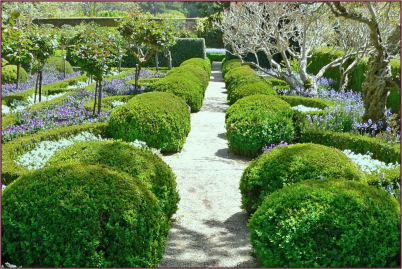
Geometric forms like these roundly sheared boxwood, abound in formal landscapes. Note the very rolling movement that results, especially when planted sequentially. Photo: Jane Reksten

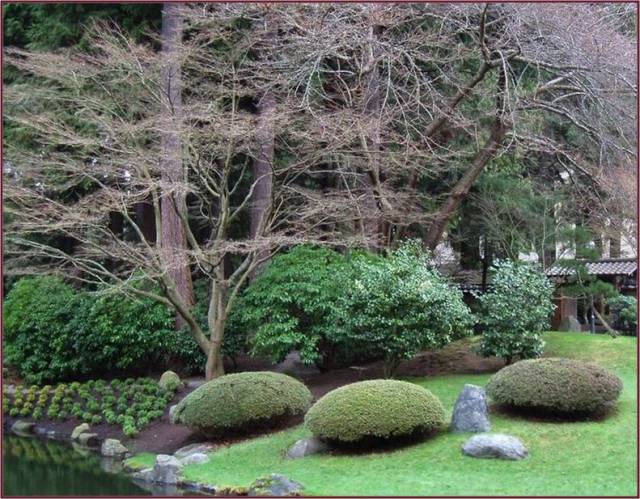
This form is common in certain theme gardens – for example, in the Japanese garden, shrubs are pruned into globose forms to mimic rocks, an important component in their garden compositions.

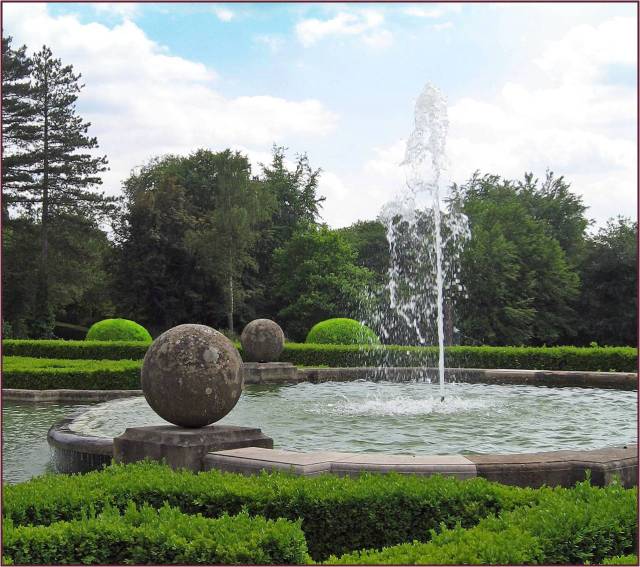
Formal gardens too, utilize very round shapes as well as other strong geometric forms.

Round forms in Formal Garden

In this formal landscape, shrubs have been pruned to repeat the shape of the stone spheres .
Photo: Marny Estep.

pruned mounds in Japanese Garden

Three mounded shrubs pruned to symbolize rocks. Japanese Garden, UBC. Photo: Ann Van de Reep

Keep in mind that despite their relative neutrality, round forms can be overused – so use them freely but make sure you punctuate periodically with other forms.

Flat/Mat

Flat forms are much wider than they are tall, and of course flat. If they have any appreciable curve to their upper surface then they are actually mounds – due to the undulating movement the curved surface creates. Flat forms that hug the ground and create spreading groundcovers are mats.

Mat form - underplanting

Spreading Juniperus sabina ‘Calgary Carpet’ underplants Syringa reticulata ‘Golden Eclipse’ in a client’s front yard.
Photo: Sue Gaviller

Like rounded and mounding forms, flat and mat forms are very common.

They are the most neutral of all the plant forms, making them excellent backdrops or underplantings for other more significant elements, like a focal point or specimen tree.

Their shorter stature and flattened surface, relate the scale of the garden to the horizontal plane of the ground.

mat form - junipers

Various Juniperus sabina and horizontalis cultivars underplant other trees and shrubs and effectively delineate the planting space and the lawn. Photo: Sue Gaviller

In addition, flat and mat forms transition the landscape from pathways or lawn into the garden, thereby connecting them.

Mat forms - transition

Numerous flat and mat forms in my front garden provide a transition zone, connecting the lawn to the garden. Photo: Sue Gaviller

Thymus pseudolanuginosis

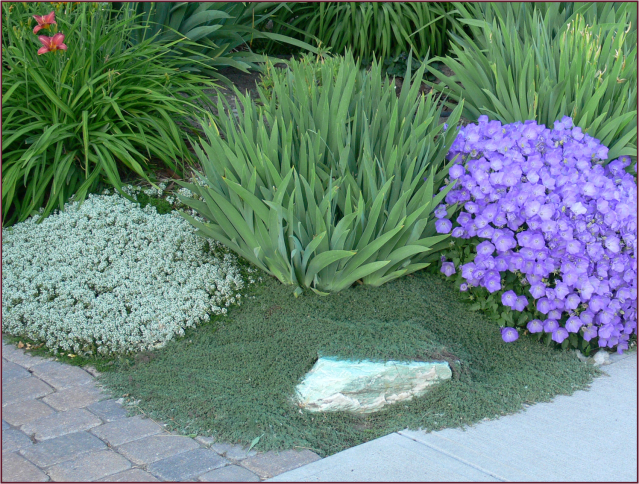
The mat form of Thymus pseudolanuginosis provides transition from sidewalk to garden and softens the straight lines of the pathways. Photo: Cathy Gaviller

Well my friends I’ve reached the end of my discussion on plant form. Texture and colour are next, but I think I’ll postpone those until our gardens wake up a bit and allow for some new ‘photo pursuits’. I’ll come up with some other topics to write about in the interim, so do stay tuned.

As I’m preparing to publish this post, I’ve become aware of the scary events that occurred in Boston earlier today – our weather woes seem suddenly pretty trivial. I won’t complain again anytime soon.

Be sure to hug your loved ones tonight.

Til next time,
Sue
 

© Sue Gaviller and Not Another Gardening Blog 2012.

Unauthorized use and/or duplication of this material without express and written permission from this blog’s author and/or owner is strictly prohibited. Excerpts and links may be used, provided that full and clear credit is given to Sue Gaviller and Not Another Gardening Blog with appropriate and specific direction to the original content.

The Form of Things to Come – Part Five

They say gardeners and golfers are the most impatient people on the planet. While I can’t speak for golfers as I don’t golf, I can certainly attest to the impatience of gardeners. Whether it’s for a prized plant to bloom or for the arrival of gardening season, we have difficulty waiting.

It’s tempting to let the warmer days and chirping robins declare the beginning of the season, but the snow has barely melted and the ground is still soggy. Patience gardeners – old man winter has at least one more kick left in him. So to keep y’all busy while patiently waiting for another gardening season to begin, let’s have some more ‘Fun with Forms’. Today I look at….

Fountain Forms

Fountain-shaped plants grow upward, then arch out and curve downward, often to the ground. They are graceful and soft, so most of the plants that exhibit this form are herbaceous perennials – daylilies, grasses/sedges, and ferns for example. There are also some woody shrubs that grow in this manner – bridal wreath spirea and Rose Glow barberry to name a couple.

Rose Glow Barberry and Ornamental Grasses

The fountain forms of Berberis thunbergii ‘Rose Glow’ and ornamental grasses create an elegant picture in this Victoria, B.C. garden. Photo: Pat Gaviller

Like weeping forms, fountains draw the eye up and back down again, but their form is much less rigid, so has a different landscape application.

While its exquisite form can make a fountain-shaped plant an appropriate accent or feature, the emphasis it provides is quite subtle because of the soft drape of its foliage. Larger size then, must also be a factor if this form is to truly stand out.

Ornamental grass and statue

A large fountain form like this striking Miscanthus can provide emphasis on its own, but the effect is that much more pronounced when paired with a non-living focal point. The two together make a stunning feature. Photo: Pat Gaviller

Fountain forms can be used fairly freely in the landscape but they do require some woody neighbours with stiffer structure to visually support their more yielding form. They’re neutral enough to be massed, the resulting effect a bit like waves in the ocean. Smaller selections planted en masse are great for underplanting a specimen tree and look especially lovely in front of a taller vertical accent to ‘stage it’.

Daylily underplanting

Left – A mass of fountain-shaped Hemerocallis provides a neutral underplanting for Syringa reticulata. Photo: Sue Gaviller.
Right – Hemerocallis ‘Stella d’Oro’ effectively stages the very vertical Caragana arborescens ‘Sutherland’ and bird bath, creating a lovely focal vignette. Photo: Sue Gaviller

This form is particularly effective when planted along the length of a design line, serving to accentuate it. When planted along both sides of a walk, fountain shapes define the passageway while still maintaining an open, welcome space.

Helictotrichon and Hemerocallis

Fountain shapes look lovely as spatial definers. Here a swath of Helictotrichon sempervirens lines the sidewalk and Hemerocallis delineates the property line. Photo: Sue Gaviller

Fountain forms can also be useful for repeating the cascading branches of weeping trees, or mimicking the spray pattern of a water fountain. This repetition of line and form brings unity to a garden composition.

Carex

Repeating clumps of ornamental grasses echo the form of both the weeping Norway spruce (right) and the droopy foliage of the pom-pom cypress (left). Photo: Pat Gaviller

Helictotrichon

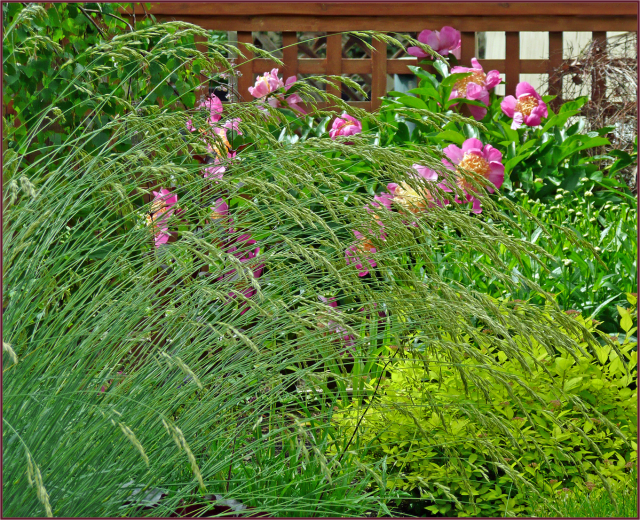
The beautiful inflorescence of Helictotrichon sempervirens appear like sprays of water in this scene from my front garden. The effect is especially marked when backlit by late-day sun. Photo: Sue Gaviller

Keep in mind that some perennials have foliage that grows in an arching fountain shape, but the flowers have a more upright growth habit. For example, Calamagrostis foliage is fountain-like but the inflorescence is upright, so when in bloom the overall effect is that of an upright column. Or the reverse may be the case where only the flowers exhibit a fountain form and the foliage presents as some other form. Determining whether a plant should be utilized as one form or the other will depend on when it blooms. In the case of Calamagrostis, the inflorescence appears fairly early, so the whole plant presents as an upright form for most of the season and should thus be used accordingly.

Well fellow gardeners, we have only a couple more plant forms to look at – I’ll cover those in the next and final post in this series on Plant Form in the landscape. Do come back!

Until then,
Sue

© Sue Gaviller and Not Another Gardening Blog 2012.

Unauthorized use and/or duplication of this material without express and written permission from this blog’s author and/or owner is strictly prohibited. Excerpts and links may be used, provided that full and clear credit is given to Sue Gaviller and Not Another Gardening Blog with appropriate and specific direction to the original content.
Harbingers of Hope

A small clump of daffodils is nestled in the corner beside my front steps. I planted the bulbs there soon after we moved into the house – that is to say, at least 20 years ago. They’ve never amounted to much, unfortunately residing in an area of the garden that’s in constant flux. Despite their roots being dug into and disturbed year after year, spring snow storms knocking them down in the height of bloom every year, and foliage cut down prematurely every year, they always come back – in fact the clump gets a wee bit bigger each year.

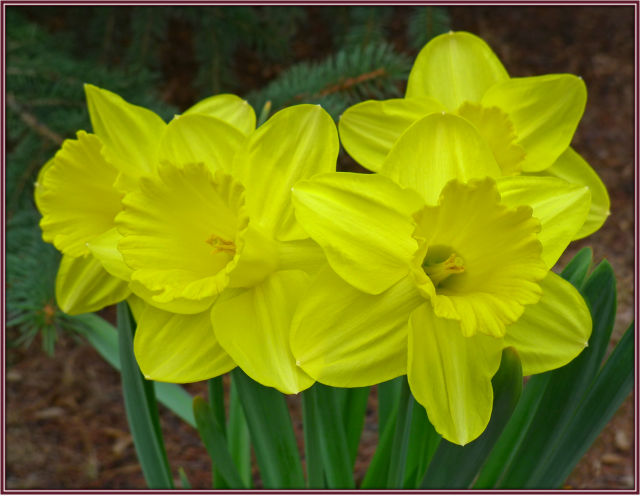
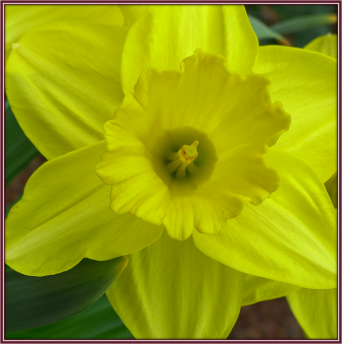
In this warm sheltered corner, the daffodils emerge from the ground in early February; a heartening assurance that winter won’t last forever. They seem to remain in stasis then, until late March when the warming sun persuades the cheery blooms to open.  While nature provides many subtle indications that spring is approaching, the lemon-hued daffodil announces spring with a flamboyant burst of colour. Indeed daffodils are the inaugural appearance of colour in my garden each spring – a true herald of winter’s end and the coming growing season.

Hope embodied.

Today they’ve begun to bloom – though a tad shorter than usual (likely due to yet another blast of snow and cold), still they speak of hope. Hello spring.

Photo: Pat Gaviller

Photo: Pat Gaviller

Much lore surrounds the daffodil: the origin of its name, its once-believed medicinal properties and even its cultural symbolism – it has been said to represent vanity, misfortune, and death. Conversely, it is also considered a symbol of rebirth, hope, joy and love. I prefer the latter.

Photo: Pat Gaviller

In the year 2000, the Canadian Cancer Society adopted the daffodil as its official emblem – the quintessential sign of hope.

Few among us can say we haven’t been touched in some way by the ‘C’ word – it has taken from us our dearest family members, our best friends and our beloved pets. For those who’ve survived its ravages, it has scarred or disfigured, taken our dignity, our youthful energy and our trust in life. But it can never take away hope – hope for a cure, hope for another day. As long as there is hope there can be joy – this is what the daffodil represents for many.

Shortly before the birth of my first child, my sister Pat was diagnosed with Stage 4 Hodgkin’s Lymphoma – a grave diagnosis requiring many months of chemo. During her intermittent hospital stays, there was always a vase of daffodils by her bedside. One such night, lying there anxious and alone, a vase of yet-to-open daffies on her nightstand, she asked God for strength, for healing, or merely for acceptance of whatever He willed. Shortly thereafter, she heard a barely audible ‘pop’………then a puff of sweet fragrance. Turning to the daffodils she saw that the first of the bunch had just opened. Then pop, pop, pop – several more opened right before her eyes, each one accompanied by the same sweet scent. I believe, as does she, that this was a moment with the Divine, an otherworldly gift – a sign of hope. My sister knew then, that regardless of the outcome, everything was going to be okay.

The month of April is Daffodil month in Canada, the Cancer Society’s spring fundraising campaign of door-to-door daffodil sales. Daffodils can also be purchased at numerous venues around your city, as well as online.

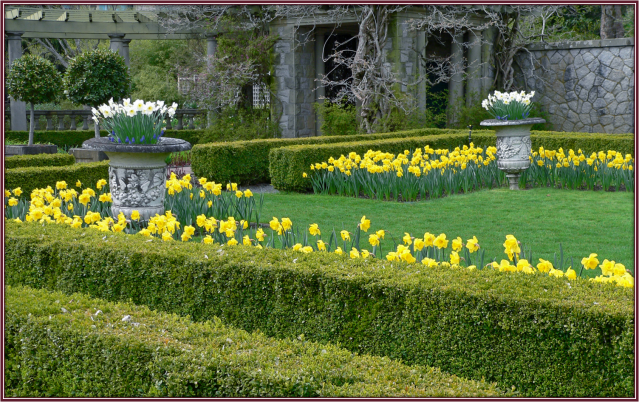
April at Hatley Park, Victoria, B.C. Photo: Jane Reksten

April at Hatley Park, Victoria, B.C. Photo: Jane Reksten

Let’s all set a vase of these bright beacons of hope, the lovely Narcissus, on our tables – it will brighten our days, and give hope to others.

“Learn from yesterday, live for today, hope for tomorrow”  ~  Albert Einstein  ~

Yours in good health
Sue
 

© Sue Gaviller and Not Another Gardening Blog 2012.

Unauthorized use and/or duplication of this material without express and written permission from this blog’s author and/or owner is strictly prohibited. Excerpts and links may be used, provided that full and clear credit is given to Sue Gaviller and Not Another Gardening Blog with appropriate and specific direction to the original content.